How I think about SEO after AI search
AI search changed what people see first. It did not change what a good page is for. Here is how I think about SEO now, with a bit of paranoia and a few sources.
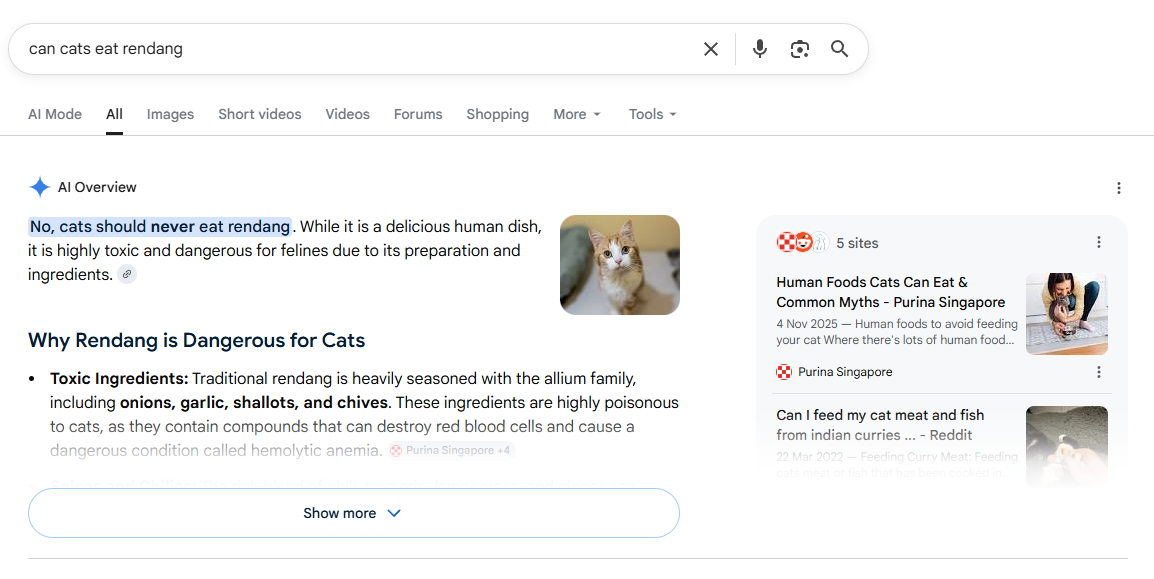
A lot of people talk about SEO like the job description just got rewritten overnight.
AI Overviews. AI Mode. Zero click. “GEO.” “AEO.” Someone always has a new acronym and a new panic.
I get why it feels loud. The results page looks different. Sessions move in weird ways. Ranking reports do not tell the full story the way they used to.
Still.
I do not think the foundation flipped.
What flipped is the surface. What people see first. How often they leave Google without opening a tab. How easy it is to flood the web with text that looks complete but does not add anything.
I wrote this because I keep seeing the same confusion. People treat traffic drops like a personal penalty. Or they chase a new checklist for “AI SEO” while ignoring the boring parts that still decide whether a page deserves to be found at all.
This is how I think about it. Not a playbook. Not a guarantee. Just the frame I use so I do not get dragged by every new headline.
What I am actually trying to say
I am not here to tell you SEO is dead.
I am also not here to tell you nothing changed.
I am saying this:
Search still rewards pages that match what someone wants, say something useful, and sit inside a site that can be trusted and understood. AI search makes the packaging louder. It does not replace those questions.
If you only optimize for a blue link and a session count, you will feel lost.
If you only optimize for being mentioned by a model and forget humans, you will write empty pages.
I want both. Visibility that makes sense, and work that still feels honest.
The paranoid part
I will be straight. Some of this is paranoia. Not conspiracy. Just the kind of doubt you get when the dashboard looks soft and the SERP looks busier than your traffic.
Paranoia one. A drop in organic sessions is not always a ranking collapse. Sometimes people simply stop clicking as often. The answer is already on the results page. Featured snippets did this for years. AI answers do it harder.
Paranoia two. Ranking number one can still be real and still feel weaker. You can “win” a query and lose the visit. That messes with how people judge success. Including me, when I stare at a chart too long.
Paranoia three. When writing gets cheap, low effort pages multiply. Then every system that cares about quality has more reason to be picky. So the shortcut of “publish more AI pages” starts to look like the old shortcut of buying weird links. Different costume. Same shape.
Paranoia four. If the only metric I trust is sessions, I will make bad decisions. I will rewrite pages that are fine. I will panic during periods where impressions and recognition matter more than raw clicks.
I do not enjoy that paranoia. I also do not ignore it. I use it as a check: am I measuring the old game only, while the board already has new pieces?
What the data keeps reminding me
I do not treat third party studies as gospel. Panels change. Methods change. Years are not always comparable.
But the direction is hard to unsee.
Clickstream research from places like SparkToro has been tracking how often Google searches end without a click to the open web. Their later numbers show that pattern getting stronger as AI answers take more space on results pages. Even with caveats about how the data was collected, the story is not “everyone still browses ten blue links like it is 2012.”
That lands for me as a simple operational note.
If fewer searches send people out, then “we ranked” and “we got traffic” are not the same sentence anymore.
So when traffic softens, I ask more questions before I assume the site broke:
- Did rankings actually move, or only clicks
- Is this query class the kind that gets answered on Google itself
- Did brand or direct demand change
- Are we looking at one page, one cluster, or the whole site
Paranoia without checks is just anxiety.
Paranoia with checks is analysis.
What Google keeps saying in public
I also do not want my thinking to float only on industry blogs.
Google publishes its own framing for site owners. Their documentation on AI features and your website is useful for that. Not because it gives a secret ranking recipe. Because it treats AI Overviews and related experiences as part of Search, with the same underlying pressure toward useful pages and clear content.
That matches how I already work.
People first content. Pages that answer something real. Sites that are crawlable and understandable. No magic switch labeled “AI SEO on.”
When official docs and field data point at the same tension (answers stay on the SERP more often, quality still matters), I stop arguing with the weather. I adjust how I plan work.
What changed on the surface
A few surface shifts matter in practice.
Search results can answer more before a click happens.
Queries can get longer and more conversational.
Visibility can mean a citation or a mention, not only a classic organic position.
Reporting needs more than “organic users this week” if you want an honest picture.
None of that means technical SEO is optional.
None of that means intent is dead.
None of that means structure is a nice to have.
It means the scoreboard got wider.
I still care about rankings. I just refuse to treat them as the only proof that SEO work did something.
What did not change underneath
This is the part I keep repeating to myself when the timeline gets noisy.
Intent still comes first.
Why is someone searching. What would “done” look like for them. If the page misses that, polish will not save it.
Usefulness still beats length.
A short page that settles the question can beat a long page that wanders. Word count was never a clean ranking lever. It still is not.
Trust still compounds.
Who is behind the page. Does the site look like it knows the topic. Are claims grounded. That mattered before generative text got easy. It matters more now, because thin confidence is cheap to produce.
Structure still carries the system.
Internal links. Clear headings. Pages that load and work on a phone. A site that is not fighting its own crawl path. I learned systems thinking outside SEO, in inventory and devices. The habit stuck. Search is still a system reading other systems.
If you read my earlier notes on ranking, you will hear the same backbone. AI search did not invent those ideas. It just made weak pages easier to spot and strong pages easier to undervalue if you only watch clicks.
Ranking is only one kind of visibility
I used to explain SEO like a ladder of positions.
Now I explain it more like layers of being found.
- Ranked in classic results
- Shown or cited when Search summarizes
- Recognized as a brand or a reliable source over time
Those layers overlap. They are not identical.
A page can rank and get few clicks.
A brand can get demand even when one page is not number one.
A clear explainer can feed how people (and systems) describe a topic, even when the session never becomes a visit.
Does that make measurement messier? Yes.
Does that mean we stop building good pages? No.
It means I plan content for the person first, then make sure the site is easy for machines to parse. I do not reverse that order because a new SERP module showed up.
Usefulness is harder to fake now
This is where my opinion gets sharper.
AI is good at sounding finished.
It is less good at having been there.
First hand detail. Constraints. Tradeoffs. What failed. What you would not do again. The weird edge case you only learn by doing the work.
That is information gain in plain language. Something the reader could not get from ten near identical posts.
I am not anti AI tools. I am anti empty pages dressed as authority.
If a page exists mainly to catch a keyword variation, it was always fragile.
If a page exists mainly because generation made publishing free, it is still fragile.
The bar for “looks like content” dropped.
The bar for “deserves trust” did not drop with it.
Structure is how systems understand you
I care about structure more than most tactic lists admit.
Not because schema is a magic wand.
Because a confused site is hard for people and hard for software.
Internal links tell a story about what belongs together.
Headings tell a story about what the page is really about.
Clean templates and sensible URLs reduce friction.
Technical basics keep the door open so quality can even be evaluated.
When Search summarizes or cites, it still needs sources it can interpret. A pile of isolated posts with no spine is a weak system. A small site with clear coverage and honest pages can punch above its size.
That is systems thinking again. Stock too thin breaks production. Structure too thin breaks understanding.
What I pay less attention to now
I still watch the industry. I just spend less energy on:
- Keyword density rituals
- Word count targets as a quality score
- Panic rewrites after every rumor
- Tool promises about guaranteed AI Overview placement
- Publishing volume for its own sake
- Treating every traffic dip as a core update story without checking click behavior and query type
I would rather be slightly late and clear than early and wrong.
How I decide what to work on
When I plan SEO work now, I ask a short set of questions.
- What is the person actually trying to finish
- Does this page add something real, or only restate the average answer
- Can a stranger trust why this site is speaking on the topic
- Is the page easy to crawl, read, and navigate on a phone
- If clicks fall but the page is still the right answer, what else are we measuring
- Are we building a system of pages, or a stack of orphans
If the answers are weak, I fix the page or I do not publish.
If the answers are strong, I do not abandon the page just because the SERP got a new summary box.
That is the whole method. Boring on purpose.
In simple terms
If you want my current headspace in one list:
- AI search changed the surface of results more than the definition of a good page
- Zero click behavior is real enough that sessions alone can lie to you
- Ranking still matters, but it is only one layer of visibility
- Intent and usefulness still come before keywords and volume
- Trust and first hand value matter more when average text is free
- Structure and technical basics still decide whether quality can be seen
- Shortcuts that flood the web with empty pages are still shortcuts
- I write and build for people first, then make the system readable
I did not stop doing SEO after AI search.
I stopped pretending the only win condition is a blue link and a rising session graph.
The job is still the same underneath. Help someone. Make it clear. Make it trustworthy. Make the site a system that can stand up over time.
The rest is noise until it shows up in real behavior or real documentation. Then it becomes another input, not a new religion.